
Business Setup for Agritech Startups in Zimbabwe
If you’re launching an agritech startup in Zimbabwe whether it’s precision‐agriculture drones, digital marketplaces connecting farmers, IoT for irrigation, farm analytics, or supply‑chain platforms proper business setup is a critical first step. This covers company registration, regulatory licensing, market positioning, and the operational platform you will build.
Company registration and legal structure
Begin by registering a legal entity with the relevant Zimbabwean authorities. Choose the appropriate legal form e.g., a private limited company. Registration gives you a Taxpayer Identification Number (TIN), allows you to open a bank account, contract with customers/suppliers, and provides credibility. The benefits of registering a company include access to deductible legitimate business expenses, VAT registration, and improved legitimacy. Make sure your business address, directors, regulatory compliance (for example with Zimbabwe Investment & Development Agency (ZIDA) if you are eligible) are properly filed. ZIDA offers a one‑stop investment services centre for company registration, tax registration, licences etc.
Regulatory and operational signals specific to agritech
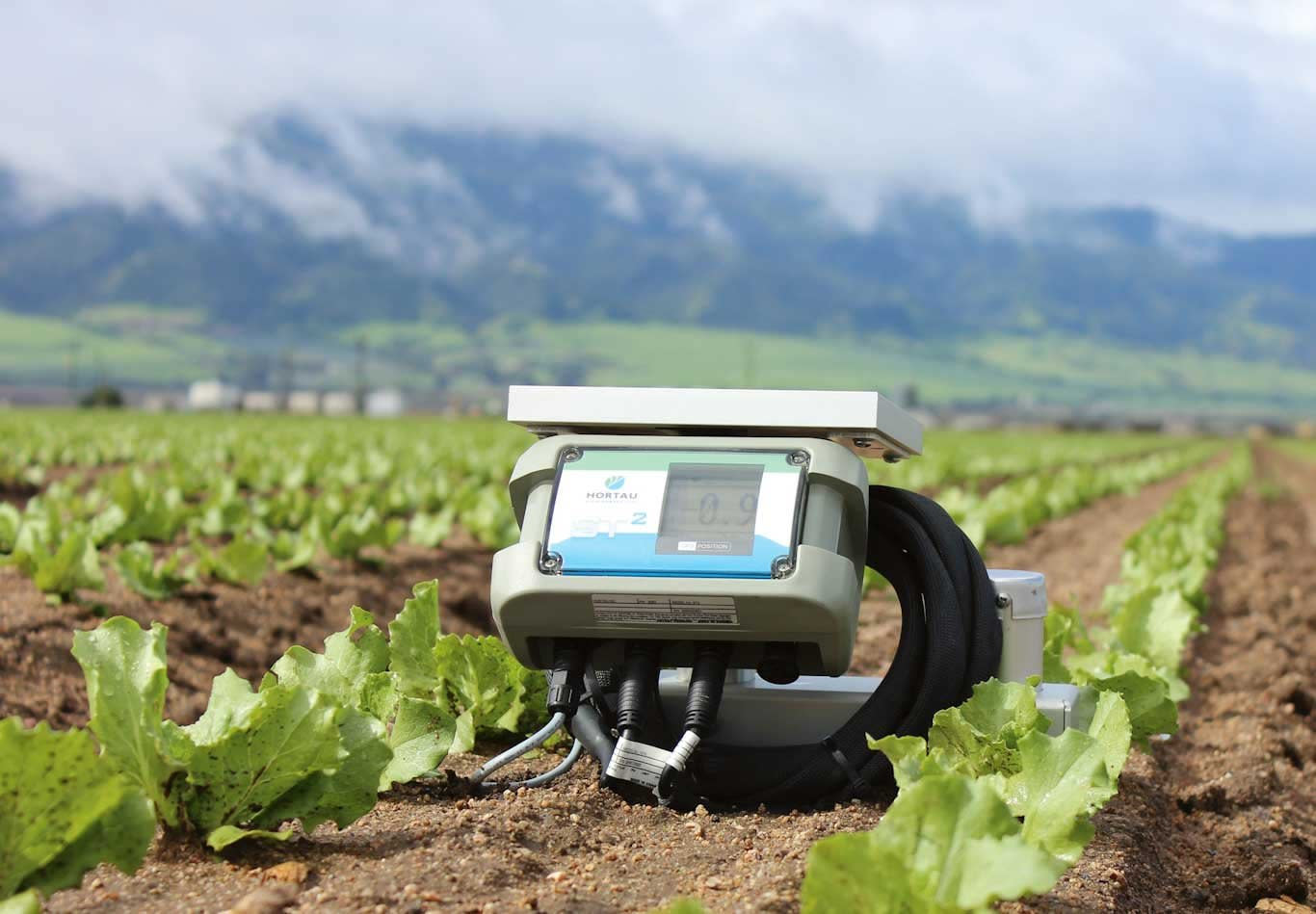
Agritech deployments often involve hardware (drones, sensors, IoT), software (analytics, mobile apps), data collection (farmers, fields), and sometimes even financial services (credit to farmers). You will need to consider importation of equipment, data‑privacy (if collecting farmer data), certifications (if handling agro‑chemicals or inputs), and market linkages (to farmers, cooperatives, export markets). For example, one Zimbabwe agritech firm leverages satellite imagery and AI to monitor crops and works with smallholder and commercial farmers. You’ll want a business plan that clearly articulates your value proposition, target farmers/farms, technology stack, revenue streams (subscription, marketplace commissions, hardware sales, analytics fees) and how you scale.
Market positioning & supply‑chain considerations
Agritech in Zimbabwe is gaining traction the startup ecosystem is reported to be growing in agritech and AI sectors. As a startup you should identify your niche: e.g., smallholder farmers vs commercial farms; precision irrigation vs pest‑detection; marketplace linking farmers to buyers; cold‑chain or logistics for horticulture. Partnerships matter. For example, the startup Farmhut received investment and is linking farmers to markets through digital platforms. Also the platform Cholsas connects farmers and suppliers. Build your go‑to‑market strategy around service to farmers, data/tech value, and scale. Finally, infrastructure constraints in Zimbabwe (power, connectivity, rural reach) mean your model must factor in hardware robustness, offline capability, ease of use for farmers, mobile payment integration etc.
Tax Incentives for Agritech and Agricultural Investment
One of the advantages for agritech startups in Zimbabwe is that agriculture and agribusiness are priority sectors for incentives. Understanding these can help you optimise your tax position and manage your cash‑flow.
Sector‑specific incentives
Under Zimbabwe’s agriculture investment frameworks, there are incentives such as income tax exemptions, accelerated depreciation (capital allowances), and customs duty relief for importation of machinery and equipment. For example: income from farming operations may enjoy special treatment; farm investments get initial allowances; and farmer special deductions exist. The legal investment regime indicates that companies operating in sectors such as agriculture and export manufacturing may qualify for preferential corporate tax rates, investment allowances, and duty rebates if they meet criteria (exports, location, job creation). If you operate in a designated area such as a Special Economic Zone (SEZ), further incentives apply: zero corporate tax for first 5 years, reduced rate afterwards, duty‑free import of equipment, 50% allowance on capital equipment etc. For agritech startups you should ask: Can I qualify as an agribusiness or agricultural investment under one of the incentives? Will my hardware imports (drones, sensors) qualify for duty relief or capital allowances? Some programmes such as the horticulture enterprise enhancement project open new market/processing/logistics opportunities.
Key tax / compliance obligations
Even with incentives, you must pay attention to regular tax obligations. The corporate income tax rate for many companies in Zimbabwe is 24% plus the AIDS levy of 3% (making 24.72%), though special rates may apply in priority sectors. VAT registration: If your annual taxable turnover exceeds the registration threshold you must register for VAT. You must track input VAT and output VAT. Some inputs may be exempt/zero‑rated if agriculture or export‑oriented. Customs duty: For imported equipment you may benefit from duty rebates if eligible, but you must preserve documentation, classification of machinery, and verify that the equipment is not locally produced. Withholding tax: If you pay non‑residents for services, or certain payments to local providers, this may apply; agritech often involves foreign service providers. Ensure you account for withholding taxes. Retention of records: You must keep books of account, invoices, supporting documents for at least six years (commonly) in compliance with the tax authority’s record‑keeping rules.
Strategic tips
- From startup stage, build your projections with the incentive regime in mind: e.g., when will you be profit‑generating, when do incentives expire, when does standard rate apply?
- Importation of equipment: classify correctly, seek duty relief where eligible, budget for customs/clearance delays.
- Make sure your business qualifies for preferential incentives (e.g., export orientation, processing value‑addition, rural location) and apply to the relevant agency (ZIDA).
- Maintain audit‑ready records so when you claim incentives/allowances you can substantiate your claims.
- Use incentives to free up cash‑flow: accelerated depreciation allows you to reduce taxable profits in early years.
ERP Readiness for Agritech Startups
As an agritech startup, you’re operating at the intersection of technology, agriculture, data, hardware and services. Having an integrated Enterprise Resource Planning (ERP) strategy from early on can position you for scale, improve operational efficiency and support compliance (including tax, analytics, scalability). Below are key elements to consider.
Why ERP matters in agritech
- You will likely manage multiple functions: hardware procurement/imports, software development, farmer onboarding, mobile app/analytics, field operations (maybe drones/IoT), supply‑chain or marketplace logistics, service revenue/subscriptions. An ERP gives you a unified platform to integrate these functions rather than spreadsheets and disconnected tools.
- Tax and compliance: An ERP with financial/GL/fixed‑asset/tax modules helps you track depreciation of equipment, foreign currency transactions (important in Zimbabwe), VAT and other compliance flows.
- Operational visibility & scale: As you grow, you may diversify into new geographies, add product lines, scale farmer base you’ll want an ERP that supports multi‑location, multi‑currency, multi‑segment operations.
- Investor readiness/credibility: Startups that can show clean systems, data flows, operational discipline appeal better to investors and partners.
What to look for in your ERP readiness plan
- Modules required: finance & accounting (GL, AP/AR, FX), fixed assets (for hardware), inventory (for sensors/drones/spares), CRM/farmer management, field‑service scheduling (for agritech deployments), subscription billing (if SaaS), mobile integration.
- Multi‑currency and local context: Zimbabwe presents USD & ZWL dynamics, inflation risk, and importation of equipment your ERP must handle foreign currency conversions, tracking, audit‑trail.
- Compliance & audit trail: Ensure the system supports tax‑compliance workflows: VAT capture, depreciation schedules, documentation links, proof of import/duty relief where applicable.
- Scalability: As you grow into new regions or export markets, you might need multi‑entity consolidation, export tracking, supply‑chain modules.
- Integration with hardware/IoT: If your agritech product uses drones/sensors and collects data, consider integration between operational modules (field scheduling, data capture) and business modules (billing, subscription, analytics).
- Local support & flexibility: Choose a vendor or solution that understands Zimbabwe’s context local accounting/tax rules, connectivity/power constraints, mobile‑first operations.
- Data & analytics: Since your value proposition likely involves data, ensure the ERP supports dashboards, farmer‑level analytics, operational KPIs, and ability to analyse performance (yield improvements, cost per hectare, farmer retention etc).
Implementation roadmap for agritech startups
- Start with a minimal viable system: Given startups often operate lean, you might adopt a cloud‑ERP or modular solution for finance + assets + subscriptions initially, then add modules for inventory/hardware, field service, CRM.
- Map your processes: How will you procure hardware/sensors/drones, how do they get deployed, how is farmer onboarding handled, how is subscription billing or data monetisation handled? Map these to your ERP modules.
- Configure taxonomy: Chart of accounts, cost centres (hardware, field operations, software development), currency codes (USD/ZWL), farmer segments.
- Data migration: If you have pre‑existing spreadsheets or pilot data, migrate key pieces (hardware assets register, contracts, subscriptions, farmer list) to your ERP early.
- Train your team: Your team may have agricultural/tech background but may be new to ERP – provide training and set standard operating procedures (SOPs) for hardware deployment, billing, support.
- Compliance workflows: Build in workflows that link importation of equipment -> asset register -> depreciation -> tax schedule; and subscription billing -> revenue recognition -> VAT/withholding obligations.
- Monitoring & growth readiness: Set up dashboards such as number of farmers onboarded, revenue per farmer, hardware utilisation rate, cost per deployment, churn, foreign currency exposure. Review monthly.
- Review annually: As your agritech startup evolves and possibly enters export or SEZ operations, revisit system capabilities, local tax/regulatory changes, and upgrade your ERP accordingly.
Summary Putting It All Together
Starting and scaling an agritech startup in Zimbabwe involves three critical pillars: a robust business setup, leveraging tax incentives & investment support, and building ERP readiness from day one. By:
- registering your company properly, positioning your business in a growth niche (precision agriculture, digital marketplace, IoT/analytics for farms),
- understanding and accessing tax incentives (capital allowances, duty relief, corporate tax holidays in SEZs, agricultural tax regimes),
- and deploying an ERP system that supports your hardware/software/field operations, multi‑currency/accounting/tax flows and growth into new markets,
you set yourself up to be scalable, compliant, credible, and investor‑ready.
Failure to integrate any one of these pillars may slow your growth, increase cost, create compliance risk or undermine your value proposition. On the other hand, startups that get this right benefit from cost‑savings, operational efficiency, first‑mover advantage in agritech, and stronger appeal to farmers, customers and investors.